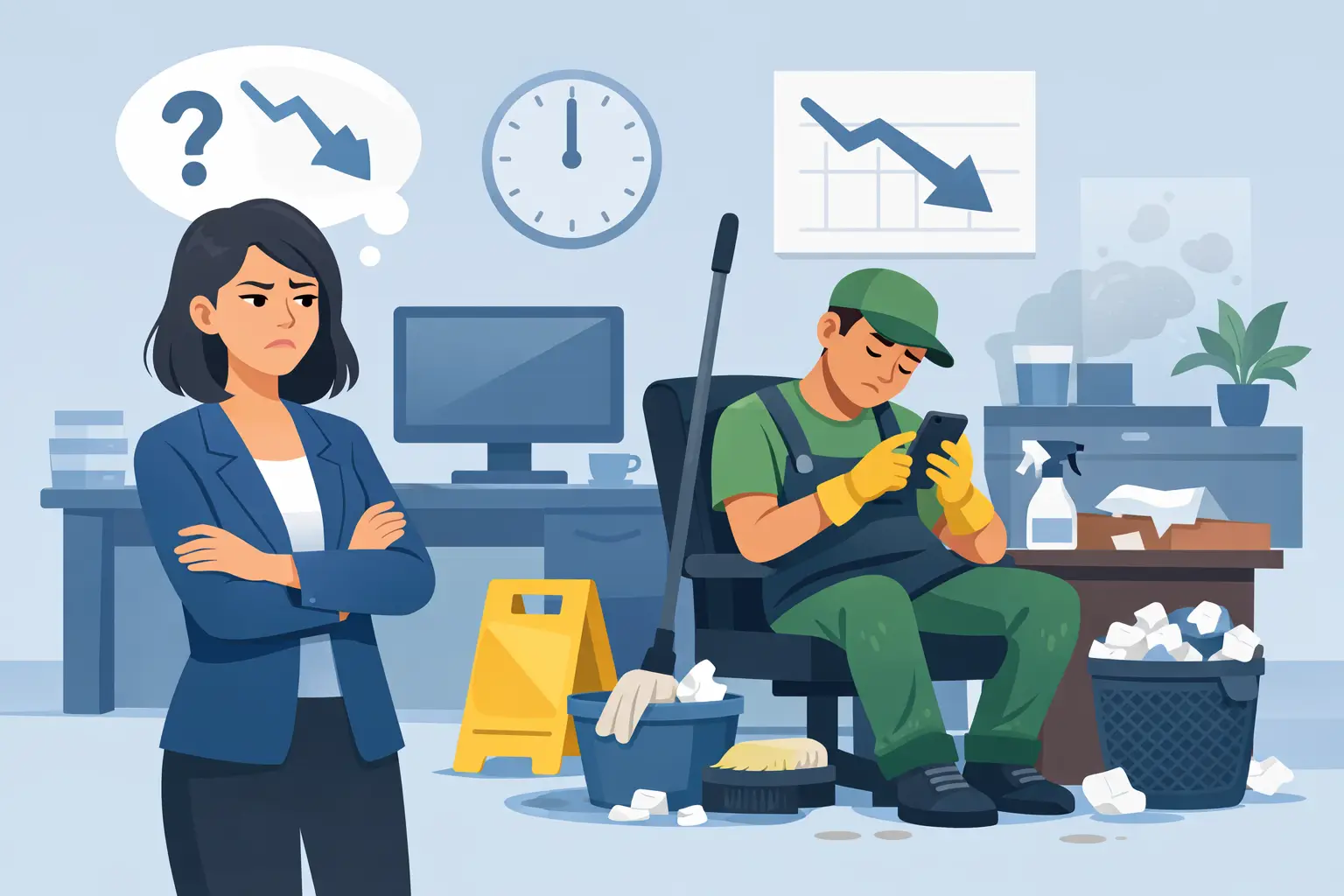
A cleaning issue rarely announces itself with one dramatic failure. More often, it appears in the details: a restroom that looks acceptable at first glance but lacks soap, dust accumulating along baseboards, or a lobby that is not ready before the first visitor arrives. Knowing the top signs your cleaner underperforms helps facility leaders address problems before they affect employee confidence, tenant satisfaction, safety, or the professional image of the business.
For Chicagoland businesses, janitorial performance is not simply a matter of appearances. A dependable cleaning partner should support the way your facility operates, whether that means working after hours, responding to a spill during a busy shift, or adjusting service as occupancy and traffic change. When that support becomes inconsistent, the cost can extend well beyond the cleaning budget.
Top Signs Your Cleaner Underperforms
Cleaning quality changes from visit to visit
Consistency is one of the clearest measures of a commercial cleaning provider. A facility should not look excellent one week and noticeably neglected the next without a clear operational reason. If quality depends on which crew arrives, what day the service takes place, or whether someone from your team is watching, there is a process problem.
Look for recurring variations in vacuuming, trash removal, restroom upkeep, floor care, and touchpoint cleaning. One missed detail can happen in any active building. A pattern of missed details suggests that checklists are not being followed, supervision is limited, or the provider does not have reliable quality-control procedures.
High-visibility areas are not consistently ready
Entrances, lobbies, reception areas, conference rooms, and restrooms shape a visitor’s first impression before anyone says a word. These spaces should be maintained to a standard that matches your organization, especially at the start of the business day or before scheduled meetings.
A cleaner may be underperforming when fingerprints remain on glass doors, debris collects at entry mats, waste bins overflow, or floors appear dull despite regular service. In office settings, neglected conference rooms can also create avoidable friction when employees must reset the space before clients arrive. A professional cleaning plan accounts for the areas people see most often and gives them appropriate attention.
The same complaints keep returning
A single complaint can be useful feedback. Repeated complaints about the same conditions are a warning sign. If employees regularly mention empty restroom dispensers, unpleasant odors, dirty break rooms, or overflowing trash, the issue is no longer isolated.
Recurring concerns often point to a gap between the agreed scope of work and what is actually happening onsite. They can also indicate that the cleaning schedule no longer matches your facility’s needs. A building with higher occupancy, added shifts, seasonal foot traffic, or more frequent client visits may need a revised service plan rather than the same schedule it used months ago.
Restrooms and break rooms receive only surface-level attention
Restrooms and employee common areas require more than a quick visual pass. They demand regular disinfecting, replenishment of consumables, odor control, and attention to details such as partitions, fixtures, floors, and waste receptacles.
Surface-level cleaning is often easy to spot. Counters may look wiped down, while corners are dirty, dispensers are empty, and floors have residue around toilets or sinks. In break rooms, the same issue can appear as stained tables, neglected microwaves, sticky flooring, or trash that is removed only after it becomes a problem. These areas receive heavy daily use and should be cleaned according to traffic, not guesswork.
Supplies are missing or inventory is poorly managed
A cleaning provider should not create extra work for your office manager, operations team, or maintenance staff. If your team is routinely searching for hand soap, paper towels, toilet paper, liners, or cleaning supplies, accountability has broken down.
Supply management may be part of the cleaning agreement or handled separately, so expectations should be clear. Still, a provider that notices low inventory, communicates early, and follows an agreed replenishment process is supporting your operation. One that waits for employees to complain is reacting after the standard has already slipped.
Communication is slow, unclear, or one-sided
Cleaning quality matters, but responsiveness matters just as much when something unexpected happens. A vendor should be easy to reach, clear about who owns an issue, and willing to provide timely updates. Delayed responses to service requests, unclear explanations for missed work, and unanswered follow-up messages are all signs of an unreliable relationship.
This is especially relevant for facilities with extended hours, medical or compliance-sensitive areas, high visitor traffic, or multiple tenants. A burst pipe, spill, event setup, or urgent sanitation concern may require attention outside a routine schedule. If your provider cannot respond when the facility needs help, the service arrangement may not fit your actual operating requirements.
Cleaning disrupts daily operations
The right schedule depends on the facility. Some businesses need overnight janitorial support, while others need daytime porters or a combination of both. What should not happen is repeated disruption caused by poor timing, lack of coordination, or crews working without awareness of the building’s activity.
Watch for cleaners entering occupied meeting rooms without notice, servicing high-traffic areas at the busiest time of day, leaving equipment in walkways, or creating noise during critical work periods. A capable provider plans around your hours, employee routines, visitor patterns, and security requirements. Flexibility is not an extra benefit when operations depend on it. It is part of reliable service.
How to Tell a One-Time Miss From a Performance Problem
Before changing providers, separate an occasional mistake from a broader service failure. Staffing absences, severe weather, special events, and unusual building conditions can affect a single visit. A professional cleaning company should acknowledge the issue, correct it promptly, and explain what will prevent a repeat occurrence.
The concern becomes more serious when the same failures continue after they have been reported. Track conditions for several weeks and document specific examples, including the date, location, impact, and whether the issue was resolved. Photos can be useful for visible conditions such as floor debris, unserviced restrooms, or unemptied waste bins.
This documentation makes the conversation more productive. Rather than saying the facility feels less clean, you can identify that the third-floor restrooms were missing paper products three times in two weeks or that lobby glass was not cleaned before morning opening on multiple dates. Clear facts give your vendor an opportunity to respond and make it easier to evaluate whether that response is sufficient.
What a Reliable Cleaning Partner Should Do Next
A qualified provider should begin with a review of the current scope, schedule, and facility conditions. Cleaning plans can become outdated as tenants change, staffing grows, construction occurs, or building traffic increases. The goal is not to apply a generic solution but to confirm that service frequency and task priorities match present needs.
The provider should also establish a clear communication path. Your team should know who to contact for routine requests, who handles urgent concerns, and how quickly to expect a response. Regular quality inspections and documented follow-up help keep standards consistent without requiring facility staff to monitor every task.
Accountability should be visible. That may include site checklists, supervisor inspections, service reports, or scheduled reviews with a dedicated account contact. The exact system can vary, but the result should be the same: your team can verify that work is completed and raise concerns without chasing answers.
When It May Be Time to Change Cleaning Providers
A provider deserves the opportunity to correct documented issues. However, replacement may be the responsible decision when repeated problems affect health, safety, tenant retention, employee morale, or client-facing presentation. It may also be time to look elsewhere if communication is consistently poor, promised improvements do not last, or the company cannot accommodate reasonable changes to your schedule.
Changing vendors has a transition cost, so it should be approached carefully. Review your current agreement, confirm the services your facility actually needs, and look for a company that takes time to understand building use instead of offering a fixed package. The lowest price can be appealing, but it may come with limited oversight, narrow service windows, or insufficient staffing. The better value is dependable performance that reduces interruptions and protects your facility’s standards.
Americlean Professional Services builds customized commercial cleaning plans around each client’s hours, traffic levels, and operational expectations, with responsive support available when routine schedules are not enough. That approach helps businesses maintain a polished environment without forcing their teams to manage the cleaning process themselves.
A clean facility should feel dependable, not uncertain. When your cleaning partner delivers consistent results, communicates clearly, and adapts to the way your business operates, your employees and visitors can focus on what brought them through the door.