
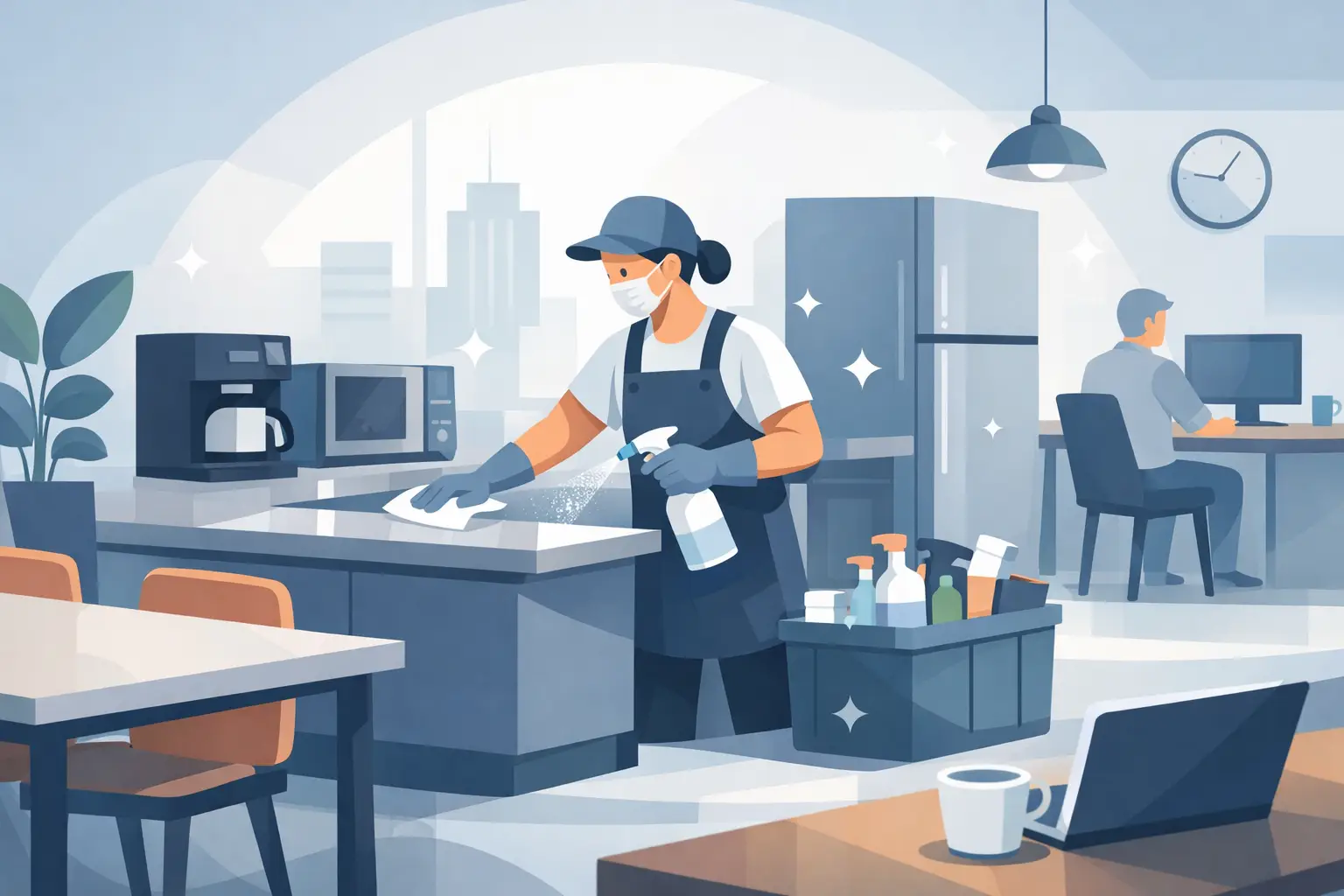
The office kitchen is one of the fastest-moving shared spaces in a facility. Coffee machines, refrigerator doors, microwave buttons, sink handles, and countertops can be touched by dozens of people between cleanings. Knowing how to disinfect office kitchens helps facility leaders reduce cross-contamination while keeping the space presentable and available for employees throughout the day.
A reliable process is not about spraying every surface more often. It starts with clear responsibilities, the right product for each surface, and a schedule that matches the number of people using the kitchen. For a high-traffic office, kitchen hygiene should be managed with the same consistency as restrooms and entry areas.
Cleaning and Disinfecting Are Different Tasks
Cleaning removes crumbs, grease, spills, and visible soil. Disinfecting uses an approved chemical product to kill or inactivate germs on a cleaned surface. The distinction matters because disinfectant does not work as intended when food residue, coffee spills, or grease are left behind.
Start by cleaning the surface with the appropriate cleaner and a clean cloth or disposable towel. Once the surface is free of residue, apply the disinfectant according to its label instructions. The product must remain wet for the listed contact time before it is wiped or allowed to air dry. Spraying and immediately wiping is a common mistake that can leave high-touch surfaces inadequately disinfected.
For food-preparation counters and other food-contact surfaces, follow the product label carefully. Some disinfectants require a potable-water rinse after the contact time. Use products approved for the surface being treated, especially on stainless steel, sealed stone, and appliance control panels.
How to Disinfect Office Kitchens on a Practical Schedule
An office kitchen needs more than a once-a-week deep clean. The right frequency depends on occupancy, how meals are handled, whether clients use the space, and the number of shared appliances. A small office with staggered schedules may need one detailed service each day. A busy workplace with a full kitchen, frequent meetings, or multiple shifts may require service during the day as well as after hours.
Prioritize High-Touch Surfaces
Disinfect high-touch points at least daily and more often during periods of heavy use. These are the places employees contact repeatedly, often before eating or preparing a drink. They include refrigerator and cabinet handles, microwave buttons and handles, coffee machine controls, faucet handles, soap dispensers, water cooler buttons, door handles, light switches, tables, and shared condiment containers.
Pay close attention to refrigerator handles and microwave controls. Both may look clean while still carrying fingerprints and food residue. Wipe appliance exteriors gently to avoid forcing liquid into openings, displays, or electronic controls.
Schedule Daily, Weekly, and Periodic Work
Daily work should cover touchpoints, counters, sinks, tables, trash areas, and spills. Empty waste before it overflows, replace liners, and disinfect the outside lid or handle. Clean and disinfect the sink basin and faucet after visible food debris has been removed.
Weekly service should reach the areas that affect sanitation and presentation over time. This includes wiping refrigerator shelving as needed, cleaning the interior of microwaves, disinfecting cabinet pulls, addressing buildup around coffee stations, and mopping floors with attention to corners and under movable furniture.
Periodic deep cleaning should address the refrigerator interior, the areas behind appliances, wall splatter near food-prep zones, vents, and grout or floor edges where debris collects. The interval may be monthly, quarterly, or based on observed use. A kitchen that hosts catered lunches will usually need deeper attention more often than a breakroom used mainly for coffee.
Use a Consistent Disinfection Process
A repeatable sequence protects both cleaning quality and employee safety. Work from cleaner areas toward dirtier ones, and from higher surfaces to lower surfaces, so soil is not transferred back onto completed work.
Remove Waste and Clear the Area
Begin by removing trash, recyclables, and expired food when that task is part of the facility's policy. Clear countertops of communal items so the full surface can be cleaned. Personal dishes, labeled lunches, and employee-owned containers should be handled according to the office's established rules rather than discarded without notice.
Use fresh liners and take waste out through a route that does not create unnecessary disruption. If a spill has leaked onto the floor, address it before continuing so it does not become a slip hazard.
Clean Before Applying Disinfectant
Use separate cloths or disposable towels for counters, sinks, appliance exteriors, and floors. Reusing a soiled cloth across the kitchen can spread contamination rather than remove it. Color-coded microfiber programs can help teams keep restroom tools separate from kitchen tools.
Remove food debris from the sink strainer and wipe away visible residue around the faucet base. Clean counters and tables with a product suited to the material, then apply disinfectant. For greasy breakroom areas, a degreasing step may be necessary before disinfection.
Respect Contact Time and Surface Limits
Apply enough disinfectant to keep the surface visibly wet for the full label-listed contact time. This can range from under a minute to several minutes depending on the product. Build that dwell time into the workflow instead of treating it as an optional delay.
Never mix disinfectants with other cleaners, including bleach and ammonia-based products. Mixing chemicals can create dangerous fumes and damage surfaces. Staff should wear appropriate gloves, use products in ventilated areas, and follow the manufacturer's directions for dilution, storage, and disposal.
Protect Food-Contact Areas and Shared Equipment
Kitchen sanitation has a practical trade-off: stronger chemical treatment is not always the correct answer for every surface. Countertops used for food preparation, microwave interiors, refrigerator shelves, and reusable dish areas require products and procedures that are safe for those uses.
Keep spray away from uncovered food, utensils, dishes, and ice makers. If a food-contact surface requires rinsing after disinfection, complete that step before employees return to the area. A clean, dry counter also gives employees confidence that the workspace is ready to use.
Shared coffee and beverage stations deserve a defined routine. Disinfect buttons, handles, drip-tray exteriors, and surrounding counters, but follow equipment instructions before cleaning removable parts or internal components. Mineral buildup, standing water, and neglected spills can affect both sanitation and the employee experience.
Create Accountability Without Adding Friction
The best kitchen standards are visible in the work, not in a stack of reminders. A concise service checklist helps ensure that each shift covers the same critical areas. It should identify the task, frequency, product category, and the person or team responsible for completion.
Facility managers should review the kitchen at different times of day, not only after scheduled cleaning. A morning inspection may reveal an overnight service issue, while an afternoon check shows whether occupancy and lunch traffic are exceeding the current plan. Persistent full trash, sticky counters, or empty soap dispensers signal that service frequency or supply levels need adjustment.
Employee cooperation also matters. Clear signage can encourage teams to label food, report spills, wash personal dishes, and avoid leaving perishable items in shared areas. These expectations should support professional cleaning, not replace it.
When Professional Kitchen Cleaning Is the Right Fit
In-house teams can manage basic wipe-downs, but commercial kitchens and high-use breakrooms often need a more structured approach. This is especially true for multi-tenant offices, healthcare-adjacent workplaces, call centers, manufacturing offices, and facilities operating beyond standard business hours.
A professional janitorial partner can build kitchen service around occupancy patterns, work around meetings and shift changes, and provide consistent documentation. For Chicagoland facilities, Americlean Professional Services can tailor recurring kitchen cleaning and disinfection to the building's schedule, traffic level, and broader facility standards.
A well-maintained office kitchen does more than look orderly. It gives employees a cleaner place to pause, eat, and reset, while helping the facility operate with the dependable presentation people expect every day.